

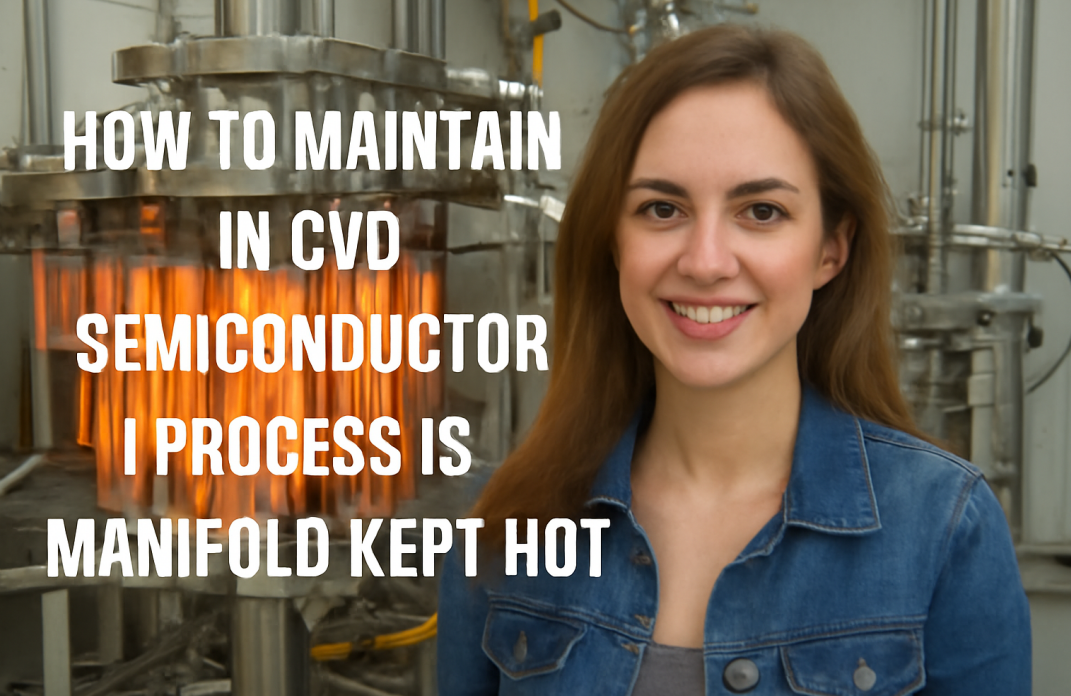
The concept of In CVD Semiconductor Process is Manifold Kept Hot plays a crucial role in modern semiconductor manufacturing. Chemical Vapor Deposition (CVD) is widely used to deposit thin films on substrates, and maintaining proper temperature conditions is essential for achieving high-quality results. One of the most critical components in this process is the gas manifold, which distributes precursor gases into the reaction chamber. If the manifold is not properly maintained or heated, it can lead to condensation, contamination, and uneven deposition. This directly impacts the efficiency and reliability of semiconductor devices. Therefore, understanding how to maintain the manifold temperature is essential for engineers and technicians working in semiconductor fabrication. Proper thermal control ensures consistent gas flow, reduces defects, and improves overall process stability. As semiconductor technology continues to evolve, the importance of maintaining optimal conditions in the CVD process becomes even more significant.
Understanding the Role of the Manifold
In the discussion of In CVD Semiconductor Process is Manifold Kept Hot, the manifold serves as a central distribution system for process gases. It connects multiple gas lines and ensures that the correct mixture reaches the deposition chamber. The manifold must operate under controlled temperature conditions to prevent unwanted chemical reactions before the gases reach the substrate. If the temperature drops, certain precursor gases may condense, leading to blockages and inconsistent flow rates. This can cause defects in the thin film deposition, which is unacceptable in high-precision semiconductor manufacturing. Keeping the manifold hot ensures that all gases remain in their vapor phase, allowing for smooth and controlled delivery. Additionally, a properly heated manifold minimizes the risk of particle formation, which can contaminate the wafer surface. This highlights the importance of thermal management in maintaining process efficiency and product quality.
Importance of Keeping the Manifold Hot
The necessity behind In CVD Semiconductor Process is Manifold Kept Hot lies in preventing condensation and ensuring uniform gas delivery. Many precursor gases used in CVD processes have high condensation points, meaning they can easily transition from gas to liquid if the temperature drops. This can lead to clogging within the manifold and disrupt the entire deposition process. By keeping the manifold heated, manufacturers ensure that gases remain stable and reactive only within the reaction chamber. This controlled environment is essential for achieving precise thin film properties. Moreover, maintaining the manifold temperature reduces maintenance frequency, as there is less buildup of unwanted residues. This not only improves efficiency but also lowers operational costs. Overall, heating the manifold is a fundamental practice that supports consistent and high-quality semiconductor production.
Temperature Control Mechanisms
Effective temperature control is a key aspect of In CVD Semiconductor Process is Manifold Kept Hot. Various heating systems are used to maintain the required temperature, including electrical heating elements, heating jackets, and thermal insulation. These systems are designed to provide uniform heating across the entire manifold, preventing cold spots that could lead to condensation. Advanced systems also incorporate temperature sensors and feedback controls to ensure precise regulation. This allows operators to monitor and adjust the temperature in real time, ensuring optimal conditions are maintained. Proper insulation further enhances efficiency by minimizing heat loss and reducing energy consumption. By implementing reliable temperature control mechanisms, manufacturers can ensure consistent gas delivery and improve the overall performance of the CVD process.
Challenges in Maintaining Manifold Temperature
Maintaining the correct temperature in In CVD Semiconductor Process is Manifold Kept Hot is not without challenges. Factors such as heat loss, uneven heating, and equipment wear can affect performance. Over time, heating elements may degrade, leading to inconsistent temperatures. Additionally, external environmental conditions can influence the system’s ability to maintain heat. These challenges require regular monitoring and maintenance to ensure optimal performance. Failure to address these issues can result in process instability and reduced product quality. Therefore, identifying and mitigating potential problems is essential for maintaining a reliable CVD process.
Preventing Gas Condensation in CVD Semiconductor Process is Manifold Kept Hot
A primary objective of In CVD Semiconductor Process is Manifold Kept Hot is to prevent gas condensation, which can severely disrupt semiconductor fabrication. Many precursor gases used in Chemical Vapor Deposition (CVD), such as metal-organic compounds and silane-based gases, have specific temperature thresholds below which they condense into liquid or solid phases. If condensation occurs inside the manifold, it can cause blockages, inconsistent gas flow, and unwanted particle formation. These issues directly affect process reliability and wafer quality. By maintaining the manifold temperature above the condensation point, manufacturers ensure that gases remain in their vapor phase during transport to the reaction chamber. This enables precise control over chemical reactions and film deposition. Additionally, preventing condensation minimizes contamination risks and reduces maintenance frequency. A properly heated manifold ensures smooth gas delivery, enhances process efficiency, and improves overall yield. In high-precision semiconductor manufacturing, even minor condensation issues can lead to significant defects, making temperature control a critical operational requirement.
Enhancing Process Stability in CVD Semiconductor Process is Manifold Kept Hot
Process stability is a fundamental requirement in semiconductor manufacturing, and In CVD Semiconductor Process is Manifold Kept Hot plays a vital role in achieving it. Stable manifold temperatures ensure consistent gas flow rates and uniform precursor delivery to the reaction chamber. Any fluctuation in temperature can alter gas density, pressure, and reactivity, leading to variations in deposition rates. These inconsistencies can result in non-uniform film thickness, poor adhesion, and reduced device performance. By keeping the manifold at a controlled temperature, manufacturers can maintain predictable process conditions, which is essential for repeatability and scalability. Stable processes also reduce the need for frequent recalibration and minimize production downtime. Furthermore, consistent thermal conditions support uniform chemical reactions, leading to higher-quality thin films. In advanced semiconductor nodes, where tolerances are extremely tight, maintaining process stability is not optional—it is critical. A well-heated manifold ensures reliability, consistency, and high-performance outcomes in CVD operations.
Maintenance Best Practices
Effective maintenance is essential to ensure that In CVD Semiconductor Process is Manifold Kept Hot continues to operate at peak efficiency. Regular inspection of heating elements, temperature sensors, and insulation materials helps detect early signs of wear or malfunction. Over time, precursor gases may leave residues inside the manifold, which can lead to contamination or restricted gas flow. Scheduled cleaning procedures are necessary to remove these deposits and maintain system cleanliness. Additionally, calibration of temperature sensors ensures accurate readings and prevents overheating or underheating conditions. Maintenance teams should also verify the integrity of electrical connections and heating circuits to avoid unexpected failures. Implementing a preventive maintenance strategy reduces downtime, extends equipment lifespan, and ensures consistent performance. Proper documentation of maintenance activities further helps in identifying recurring issues and improving operational efficiency. In high-volume semiconductor production, well-planned maintenance practices are crucial for sustaining productivity and ensuring long-term system reliability.
Role of Insulation in CVD Semiconductor Process is Manifold Kept Hot
Insulation is a key component in ensuring the effectiveness of In CVD Semiconductor Process is Manifold Kept Hot. High-performance insulation materials are used to minimize heat loss and maintain consistent temperature throughout the manifold system. Without proper insulation, external environmental factors can cause temperature fluctuations, leading to cold spots where condensation may occur. These inconsistencies can disrupt gas flow and negatively impact deposition quality. Proper insulation not only stabilizes temperature but also improves energy efficiency by reducing the amount of power required to maintain heat. This is especially important in large-scale semiconductor facilities where energy consumption is significant. Additionally, insulation protects surrounding components and personnel from exposure to high temperatures, enhancing overall safety. Advanced insulation materials are designed to withstand extreme conditions while providing long-term durability. By ensuring effective thermal insulation, manufacturers can achieve better process control, reduce operational costs, and maintain consistent performance in CVD systems.
Advanced Monitoring Systems
Modern semiconductor manufacturing relies heavily on advanced monitoring technologies, and In CVD Semiconductor Process is Manifold Kept Hot benefits significantly from these systems. High-precision sensors are used to continuously monitor temperature, pressure, and gas flow within the manifold. These sensors provide real-time data that allows operators to detect deviations immediately and take corrective action. Automated control systems can adjust heating elements dynamically to maintain optimal temperature conditions. This level of precision reduces human error and ensures consistent process performance. Additionally, data analytics tools can analyze historical trends to predict potential failures and enable proactive maintenance. This approach, known as predictive maintenance, helps reduce downtime and improve system reliability. Advanced monitoring systems also support remote diagnostics, allowing engineers to manage processes efficiently. As semiconductor processes become more complex, the integration of intelligent monitoring solutions becomes increasingly important for maintaining accuracy and efficiency.
Impact on Film Quality in CVD Semiconductor Process is Manifold Kept Hot
The quality of thin films produced in CVD processes is directly influenced by In CVD Semiconductor Process is Manifold Kept Hot. Consistent manifold temperature ensures that precursor gases reach the reaction chamber in a stable and controlled state, enabling uniform chemical reactions. If the temperature fluctuates, it can lead to uneven gas distribution, resulting in variations in film thickness and composition. These inconsistencies can cause defects such as voids, cracks, or poor adhesion, which negatively affect device performance. High-quality films require precise control over deposition parameters, and maintaining a heated manifold is essential for achieving this level of control. Uniform film growth enhances electrical and mechanical properties, which are critical for semiconductor devices. Additionally, consistent deposition improves yield and reduces the likelihood of defective wafers. In advanced applications, such as microprocessors and memory chips, maintaining film quality is crucial for ensuring reliability and performance.
Energy Efficiency Considerations
Energy efficiency is an important factor in In CVD Semiconductor Process is Manifold Kept Hot, particularly in large-scale manufacturing environments. Heating systems consume a significant portion of operational energy, making it essential to optimize their performance. Using energy-efficient heating elements and high-quality insulation can reduce energy consumption while maintaining consistent temperature levels. Additionally, advanced control systems can regulate power usage based on real-time process requirements, minimizing unnecessary energy waste. Stable temperature management also prevents frequent heating and cooling cycles, which can increase energy consumption. Improving energy efficiency not only reduces operational costs but also supports sustainable manufacturing practices. As the semiconductor industry moves toward greener technologies, optimizing energy usage becomes increasingly important. By implementing efficient heating strategies, manufacturers can achieve a balance between performance, cost-effectiveness, and environmental responsibility.
Safety Considerations
Safety is a critical aspect of In CVD Semiconductor Process is Manifold Kept Hot, as high temperatures and reactive gases present potential hazards. Proper safety measures must be implemented to protect both equipment and personnel. This includes using heat-resistant materials, installing temperature sensors, and ensuring adequate ventilation. Regular inspections help identify potential risks such as overheating, gas leaks, or equipment failure. Automated safety systems can shut down operations in case of abnormal conditions, preventing damage and accidents. Trained personnel are essential for handling emergencies effectively. Clear safety protocols and compliance with industry standards further enhance operational security. By prioritizing safety, manufacturers can ensure a stable working environment and maintain continuous production without interruptions.
Future Innovations in CVD Semiconductor Process is Manifold Kept Hot
The future of In CVD Semiconductor Process is Manifold Kept Hot lies in the integration of advanced materials and intelligent technologies. Innovations in heating elements, such as nanomaterial-based heaters, offer improved efficiency and durability. Artificial intelligence and machine learning are being used to optimize temperature control and predict system behavior. These technologies enable more precise and adaptive process management. Additionally, advancements in sensor technology provide higher accuracy and faster response times. As semiconductor devices become more complex, the demand for precise thermal control will continue to grow. Future systems will likely feature fully automated control mechanisms that require minimal human intervention. These innovations will enhance efficiency, reduce costs, and improve overall process reliability.
Industry Applications
The principles of In CVD Semiconductor Process is Manifold Kept Hot are widely applied across multiple industries. In the electronics sector, precise thin film deposition is essential for manufacturing microchips, sensors, and integrated circuits. In the renewable energy industry, CVD processes are used to produce high-efficiency solar cells. The aerospace and automotive industries also rely on CVD coatings for durability and performance enhancement. Maintaining proper manifold temperature ensures consistent results across these applications. This highlights the importance of thermal management in modern manufacturing. As industries continue to innovate, the role of CVD processes and proper temperature control will become even more significant.
Conclusion
In CVD Semiconductor Process is Manifold Kept Hot is a critical factor in achieving high-quality semiconductor production. Proper temperature control ensures efficient gas delivery, prevents condensation, and enhances process stability. By implementing advanced monitoring systems, regular maintenance practices, and energy-efficient solutions, manufacturers can optimize performance and reduce operational costs. The importance of maintaining a heated manifold will continue to grow as semiconductor technology advances. Ultimately, effective thermal management is essential for ensuring reliability, efficiency, and excellence in modern semiconductor manufacturing.
If you would like to read more articles on this topic related, please visit our Technology Category.
For more information about the Subway Surfers Unblocked School Chromebook, click on Wikipedia.
For more interesting and diverse topics, explore the homepage of our website, Note Ripple, to stay updated with the latest information and engaging content.













Leave a comment